

When it comes to the world of surveillance and camera systems, pan and tilt mounts play a crucial role in enabling flexible and dynamic monitoring. As a supplier of pan and tilt mounts, I often encounter inquiries about the weight of a typical pan and tilt mount. In this blog post, I will delve into the factors that influence the weight of these mounts and provide a comprehensive overview of what you can expect.
Understanding Pan and Tilt Mounts
Before we discuss the weight, let's briefly understand what pan and tilt mounts are. A pan and tilt mount is a device that allows a camera to move horizontally (pan) and vertically (tilt). This movement capability is essential for covering a wider area of surveillance, tracking moving objects, and providing a more comprehensive view of the monitored environment.
Pan and tilt mounts come in various types, including manual, motorized, and network - controlled. Manual mounts require physical adjustment by the user, while motorized mounts can be controlled remotely using a controller or a software interface. Network - controlled mounts can be integrated into a larger surveillance network and are often used in commercial and industrial applications.
Factors Affecting the Weight of Pan and Tilt Mounts
The weight of a typical pan and tilt mount can vary significantly depending on several factors:
1. Material
The material used in the construction of the mount is one of the primary factors influencing its weight. Common materials include aluminum, steel, and plastic. Aluminum is a lightweight and corrosion - resistant material, making it a popular choice for many pan and tilt mounts. Steel, on the other hand, is stronger and more durable but also heavier. Plastic mounts are the lightest option but may not be as robust as metal mounts.
2. Size and Design
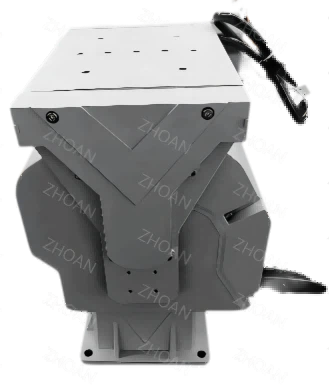
The size and design of the mount also play a role in determining its weight. Larger mounts that are designed to support heavier cameras or have a wider range of motion will generally be heavier than smaller, more compact mounts. Additionally, mounts with more complex designs, such as those with built - in gears, motors, and control systems, will also add to the overall weight.
3. Payload Capacity
The payload capacity of a pan and tilt mount refers to the maximum weight of the camera and any additional accessories that it can support. Mounts with a higher payload capacity are typically heavier because they need to be more robust to handle the additional weight. For example, a mount designed to support a large - format professional camera with a heavy lens will be heavier than a mount designed for a small, lightweight surveillance camera.
Typical Weight Ranges
Based on the factors mentioned above, the weight of a typical pan and tilt mount can range from a few ounces to several pounds.
Light - Duty Mounts
Light - duty pan and tilt mounts are usually designed for small, lightweight cameras, such as those used in home surveillance systems or for simple monitoring applications. These mounts are often made of plastic or lightweight aluminum and can weigh anywhere from 4 to 16 ounces (0.11 to 0.45 kg).
Medium - Duty Mounts
Medium - duty mounts are suitable for medium - sized cameras and are commonly used in commercial and industrial surveillance applications. They are typically made of aluminum or a combination of aluminum and steel and can support payloads of up to 15 kg (33.07 lb). The weight of medium - duty mounts can range from 2 to 5 pounds (0.91 to 2.27 kg). For more information on medium - duty mounts, you can check out our Variable Speed Medium Duty Motorized Pan Tilt Head With15kg (33.07lb) Payload.
Heavy - Duty Mounts
Heavy - duty pan and tilt mounts are designed for large, professional cameras and are used in high - end surveillance applications, such as in stadiums, airports, and large industrial facilities. These mounts are made of steel and can support payloads of 50 kg (110.23 lb) or more. The weight of heavy - duty mounts can exceed 10 pounds (4.54 kg) and may even reach 20 pounds (9.07 kg) or more, depending on the specific design and payload capacity.
Importance of Considering Weight
When selecting a pan and tilt mount, it is important to consider the weight for several reasons:

1. Installation
The weight of the mount can affect the ease of installation. Heavier mounts may require more substantial mounting surfaces and additional support structures to ensure stability. This can increase the complexity and cost of the installation process.
2. Power Consumption
In the case of motorized mounts, the weight of the mount and the payload can affect the power consumption. Heavier mounts require more power to move, which can result in higher energy costs over time.
3. Compatibility
The weight of the mount must be compatible with the camera and any other accessories that will be attached to it. Using a mount that is too light for the camera can result in instability and inaccurate movement, while using a mount that is too heavy may be overkill and unnecessary.
Our Product Offerings
As a supplier of pan and tilt mounts, we offer a wide range of products to meet the diverse needs of our customers. Our product line includes light - duty, medium - duty, and heavy - duty mounts, each designed to provide reliable performance and flexibility.
For example, our Intelligent Hidden Security Camera in Landscape Network PTZ Camera with OEM Service for Safe City is a high - quality pan and tilt mount that is suitable for a variety of surveillance applications. It is lightweight yet robust, making it easy to install and operate.
We also offer the Network High Speed PTZ Camera With IR, which is a medium - duty mount with advanced features such as high - speed movement and infrared illumination. This mount is ideal for commercial and industrial surveillance applications where fast and accurate monitoring is required.
Conclusion
The weight of a typical pan and tilt mount can vary depending on factors such as material, size, design, and payload capacity. By understanding these factors and the typical weight ranges, you can make an informed decision when selecting a mount for your camera system.
If you are in the market for a pan and tilt mount, we invite you to explore our product offerings. Our team of experts is ready to assist you in choosing the right mount for your specific needs. Whether you are a homeowner looking for a simple surveillance solution or a large - scale enterprise in need of a high - end monitoring system, we have the products and expertise to meet your requirements. Contact us today to start the procurement discussion and take your surveillance capabilities to the next level.
References
- "Surveillance Camera Handbook" by Mark Nixon
- "Security Camera Systems: Design and Installation" by George Petropoulos


