

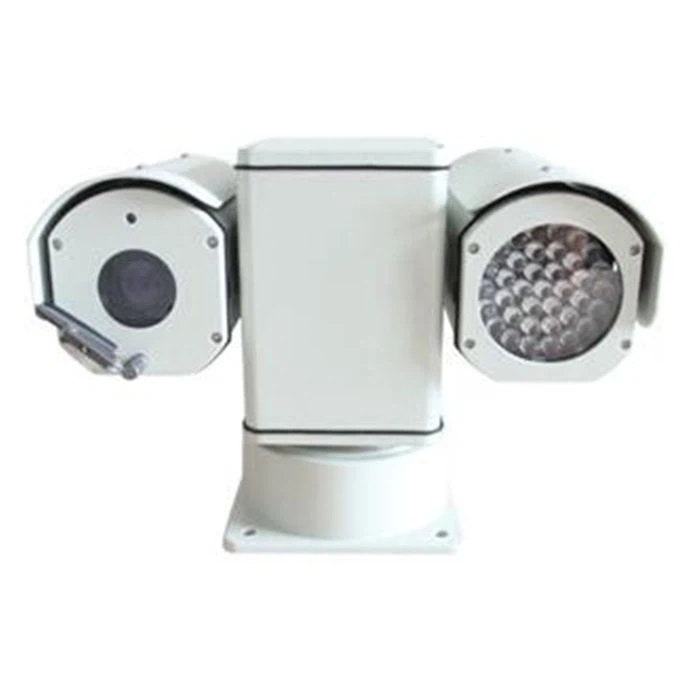
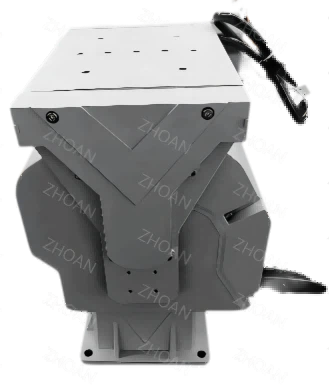
In today's dynamic educational landscape, integrating advanced technologies is crucial for enhancing learning experiences and preparing students for the future. One such technology that holds significant potential in educational settings is the Pan Tilt Unit (PTU). As a supplier of high - quality Pan Tilt Units, I am excited to explore the diverse educational projects where these devices can be effectively utilized.
Astronomy Education
Astronomy is a field that captivates the imagination of students of all ages. With a Pan Tilt Unit, students can build their own advanced telescope tracking systems. By attaching a telescope to the PTU, it can be programmed to follow celestial objects as they move across the sky. This hands - on project allows students to understand the principles of astronomy, such as the rotation of the Earth, the movement of stars, and the orbits of planets.
For example, students can create a simple program using basic coding languages like Python to control the PTU. They can input the coordinates of a specific star or constellation, and the PTU will automatically adjust the position of the telescope to point at it. This not only provides a practical application of coding skills but also deepens their understanding of astronomical concepts. Moreover, real - time tracking of celestial objects can enhance the overall stargazing experience, making it more engaging and educational.
Robotics and Automation
Robotics is an interdisciplinary field that combines mechanical engineering, electronics, computer science, and control theory. Pan Tilt Units play a vital role in robotics projects. They can be used to mount cameras on robots, allowing them to have a wider field of view and the ability to track objects.
In a classroom setting, students can build their own robots equipped with a PTU - mounted camera. For instance, they can design a robot that is capable of following a moving target, such as a ball or a person. The camera on the PTU captures the image of the target, and through image - processing algorithms, the robot can determine the position of the target and adjust the PTU accordingly to keep the target in the camera's field of view. This project helps students learn about computer vision, sensor integration, and control systems.
Furthermore, PTUs can be used in robotic surveillance projects. Students can create a robotic sentry that uses the PTU to scan an area and detect any unauthorized movement. This type of project not only teaches students about security systems but also about the integration of different components in a robotic system. To learn more about a vehicle - based application, you can check out Vehicle Load PTZ Camera Applied To Robot.
Biology and Ecology
In the study of biology and ecology, observing and documenting the behavior of animals in their natural habitats is essential. A Pan Tilt Unit can be used to mount cameras in wildlife observation areas. This allows researchers and students to remotely control the camera's position and orientation, enabling them to capture detailed footage of animals without disturbing their natural behavior.
For example, in a wildlife reserve, students can set up a PTU - mounted camera near a bird's nest. They can use a remote control or a pre - programmed system to adjust the camera's position to get different angles of the nest and observe the birds' activities, such as feeding, nesting, and raising their young. This project provides students with a unique opportunity to study animal behavior in a real - world setting.
In addition, PTUs can be used in underwater biology research. By mounting a waterproof camera on a PTU and submerging it in a pond or an aquarium, students can study the behavior of fish, plants, and other aquatic organisms. They can control the PTU to explore different areas of the water body and observe the interactions between different species.
Physics and Engineering Experiments
Pan Tilt Units can be used in a variety of physics and engineering experiments. In a physics classroom, students can use a PTU to study the principles of motion and mechanics. For example, they can attach a pendulum to the PTU and use it to study the effects of different angles and forces on the pendulum's motion. By varying the pan and tilt angles of the PTU, students can observe how the pendulum's period and amplitude change.
In engineering projects, PTUs can be used to test the stability and performance of structures. For instance, students can build a small - scale bridge model and mount a PTU - controlled camera on it. They can then simulate different loads and environmental conditions on the bridge and use the camera to monitor any changes in the structure. This type of project helps students understand the importance of structural integrity and the role of sensors in engineering design.
Video Production and Media Studies
In the field of video production and media studies, Pan Tilt Units are invaluable tools. They can be used to create professional - looking videos with smooth and controlled camera movements. In a media classroom, students can learn about camera operation, framing, and composition by using a PTU to control the movement of a camera.
For example, students can create a short film and use the PTU to create dynamic camera shots. They can program the PTU to follow a character as they move through a scene, or to pan across a landscape to create a sense of scale. This hands - on experience allows students to understand the technical aspects of video production and how to use camera movement to tell a story effectively.
Moreover, PTUs can be used in live event coverage. Students can set up a PTU - mounted camera at a school event, such as a sports game or a concert, and use it to capture different angles of the event. This not only provides practical experience in live video production but also enhances their understanding of event management and media technology. If you are interested in a vehicle - mounted camera for video surveillance, you can refer to Police Vehicle Mounted Intelligent High Speed IR Car PTZ Camera for Video Surveillance System.
Agricultural Education
In agricultural education, Pan Tilt Units can be used to monitor crops and livestock. By mounting cameras on PTUs in a farm setting, students can remotely observe the growth of crops, the health of livestock, and the overall condition of the farm.
For example, students can set up a PTU - mounted camera in a greenhouse to monitor the growth of plants. They can program the PTU to take regular images of the plants from different angles and use image - processing software to analyze the growth rate, detect diseases, and monitor the nutrient levels. This project helps students understand the importance of technology in modern agriculture and how data - driven decision - making can improve crop yields.
In addition, PTUs can be used to monitor the behavior of livestock. By mounting cameras on PTUs in a barn or a pasture, students can observe the movement, feeding habits, and social interactions of animals. This type of project provides students with a better understanding of animal welfare and the management of livestock farms.
Conclusion
As demonstrated above, Pan Tilt Units have a wide range of applications in educational projects across various disciplines. From astronomy and robotics to biology and video production, these devices offer unique opportunities for students to engage in hands - on learning experiences, develop critical thinking skills, and gain practical knowledge in different fields.
If you are an educator, researcher, or institution interested in incorporating Pan Tilt Units into your educational projects, we are here to help. Our company offers a variety of high - quality Pan Tilt Units, such as the Variable Speed Medium Duty Motorized Pan Tilt Head With15kg (33.07lb) Payload, that are suitable for different educational needs. We are committed to providing excellent products and support to ensure the success of your projects. Please feel free to contact us to discuss your specific requirements and start a procurement negotiation.
References
- National Science Teachers Association. (2019). Integrating Technology in Science Education.
- International Society for Technology in Education. (2020). Technology - Enhanced Learning in the 21st Century.
- American Association for the Advancement of Science. (2018). Science and Technology Education for the Future.


