

Hey there! As a supplier of Explosionproof PTZ cameras, I often get asked about how these cameras perform in low - light conditions. It's a crucial question, especially for industries where safety and surveillance are top priorities, and low - light environments are common.
First off, let's understand what an Explosionproof PTZ camera is. PTZ stands for Pan, Tilt, and Zoom. These cameras can move horizontally (pan), vertically (tilt), and have a zoom function, which gives you a wide range of viewing angles and the ability to get a closer look at what you're monitoring. The "explosionproof" part means that the camera is designed to prevent the ignition of flammable gases, dust, or fibers in hazardous areas.
Now, when it comes to low - light conditions, there are several factors that determine how well an Explosionproof PTZ camera performs.
1. Image Sensor
The image sensor is like the heart of the camera. It captures light and converts it into an electrical signal that forms the image. In low - light situations, a larger image sensor with more pixels per inch can make a huge difference. Cameras with a larger sensor can collect more light, which results in a brighter and clearer image. For example, some of our high - end Explosionproof PTZ cameras are equipped with sensors that have excellent low - light sensitivity. They can pick up even the slightest amount of light, whether it's from a distant streetlight or the moon.
2. Infrared (IR) Illumination
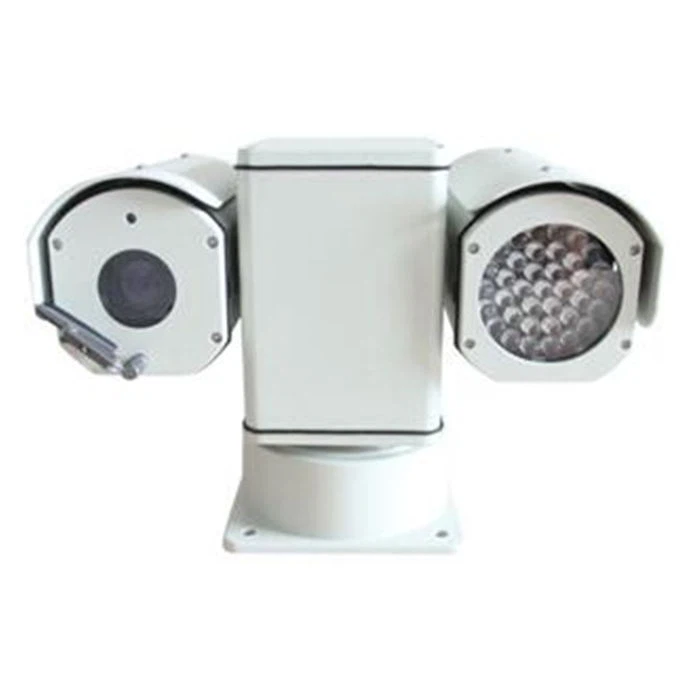
Many of our Explosionproof PTZ cameras come with built - in IR illuminators. IR light is invisible to the human eye but can be detected by the camera's sensor. When the ambient light drops below a certain level, the IR illuminators automatically turn on. This allows the camera to see in complete darkness. The range of the IR illumination is also important. Some of our cameras can illuminate up to a few hundred meters, giving you a wide coverage area even in the dark. For instance, our Police Vehicle Mounted Intelligent High Speed IR Car PTZ Camera for Video Surveillance System has a powerful IR system that provides clear images in low - light or no - light conditions, making it ideal for law enforcement and security applications.
3. Low - Light Mode and Image Processing
Modern Explosionproof PTZ cameras have advanced low - light modes and image processing algorithms. These features can enhance the image quality by adjusting the contrast, brightness, and color balance. For example, in low - light mode, the camera might slow down the shutter speed to allow more light to reach the sensor. The image processing algorithms then work to reduce noise and artifacts that can occur in low - light images. This results in a cleaner and more detailed picture.
4. Lens Quality
The lens of the camera also plays a vital role in low - light performance. A high - quality lens with a large aperture can let in more light. The aperture is the opening in the lens that controls the amount of light passing through. A wider aperture (a lower f - number) allows more light to reach the sensor, which is essential in low - light conditions. Our cameras are equipped with high - quality lenses that are designed to minimize distortion and maximize light transmission.

Real - World Performance
In real - world scenarios, our Explosionproof PTZ cameras have proven their worth in low - light conditions. For example, in oil refineries, where there are areas with very little ambient light, our cameras can provide clear and reliable surveillance. They can detect any movement or potential hazards, even in the middle of the night. Similarly, in mines, where the lighting is often poor, our cameras can help monitor the operations and ensure the safety of the workers.
Another great application is in transportation and logistics. Our Vehicle Load PTZ Camera Applied To Robot can be used on trucks or robots that operate in dimly lit warehouses or yards. The camera's ability to perform well in low - light conditions allows for accurate monitoring of the cargo and the movement of the vehicles.
Comparing with Other Options
When compared to fixed cameras or non - explosionproof PTZ cameras, our Explosionproof PTZ cameras have a clear advantage in low - light conditions. Fixed cameras have a limited field of view and cannot adjust to different lighting situations. Non - explosionproof PTZ cameras may not be suitable for hazardous environments and might not have the same level of low - light performance.
Our Variable Speed Medium Duty Motorized Pan Tilt Head With15kg (33.07lb) Payload is a great example of a high - performing PTZ camera. It can be used in various industries, and its low - light capabilities make it a reliable choice for surveillance in all lighting conditions.
Conclusion
In conclusion, our Explosionproof PTZ cameras are designed to perform exceptionally well in low - light conditions. With features like high - quality image sensors, IR illumination, advanced low - light modes, and excellent lenses, they can provide clear and reliable surveillance even in the darkest environments.
If you're in the market for an Explosionproof PTZ camera for your business, whether it's for a hazardous industrial area, a transportation company, or a security application, we'd love to have a chat. We can help you choose the right camera based on your specific needs and the lighting conditions of your site. Don't hesitate to reach out for a consultation and start discussing your procurement options.
References
- Camera Technology Handbook, Third Edition by Joseph A. Angelo Jr.
- Handbook of Video Surveillance by Klaus D. Schilling


